Closing the Disease Modification Gap
Emerging Therapies in Myelofibrosis Beyond JAK Inhibition
Division of Hematology/Oncology, Vanderbilt University Medical Center
2026-08-18
Disclosures
AK: consulting relationships with Sobi, Geron Corporation, MorphoSys AG, Rigel Pharmaceuticals, Servier Pharmaceuticals, Syndax Pharmaceuticals, Blueprint Medicines, Ascentage Pharma, Takeda Oncology, Cogent Biosciences, and Novartis. Co-host of Blood Cancer Talks.
These arrangements include advisory board participation, expert input on clinical development strategies, and educational activities; honoraria and/or consulting fees received within the past 36 months.
Novel Therapeutic Targets
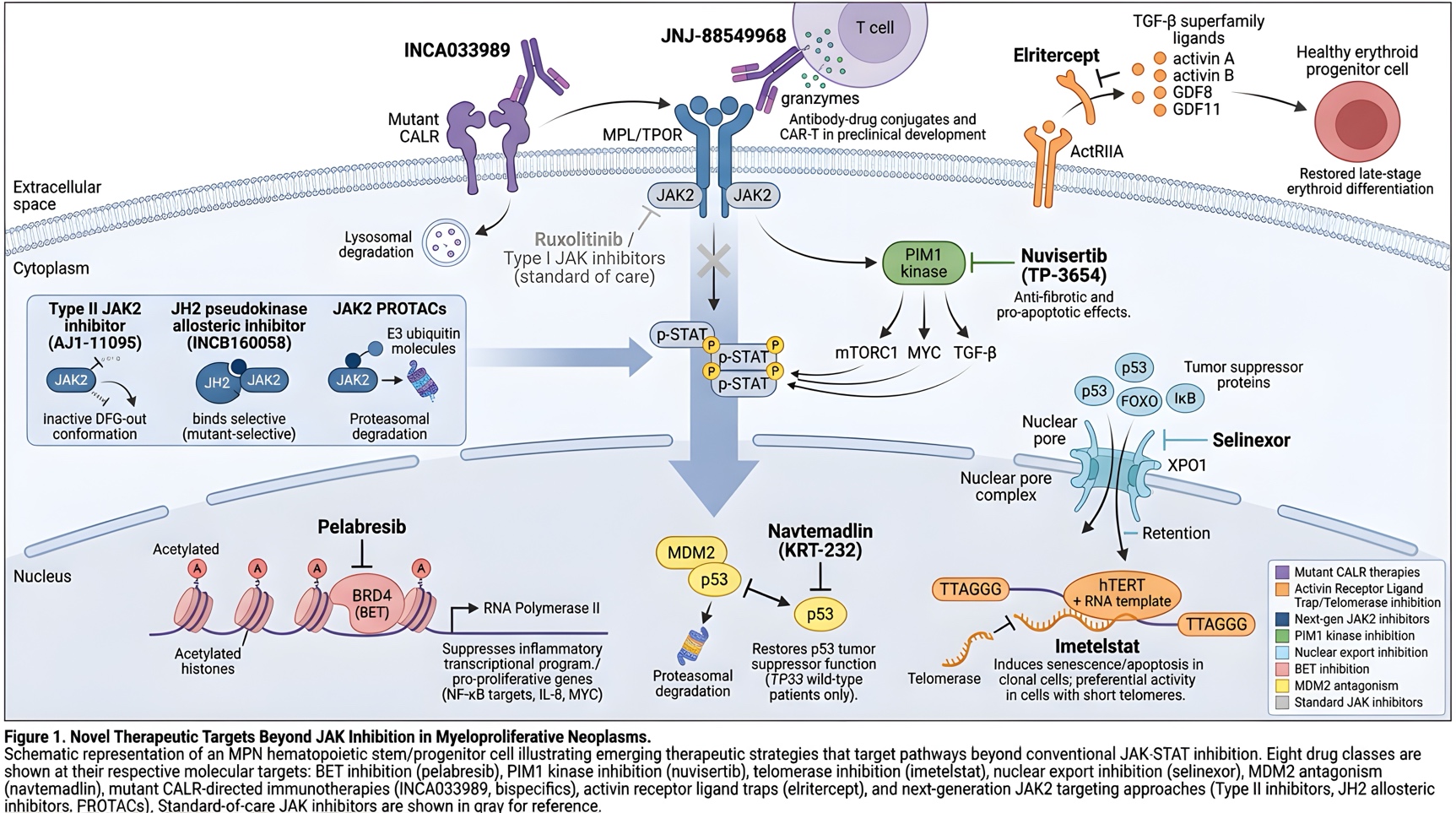
Therapeutic landscape in myelofibrosis beyond JAK inhibition
Roadmap
- Why JAK inhibition alone is not enough?
- What “disease modification” would actually mean?
- Mechanisms in clinical development
- Transcriptional: BET
- Clonal: telomerase, mutant CALR
- Signaling: PIM1, XPO1, next-generation JAK2
- Anemia: activin receptor ligand trap
- Where the field goes next?
Why look beyond JAK inhibition
MPNs in one slide
- Clonal hematopoietic stem cell disorders with overproduction of mature myeloid cells
- Subtypes: PV, ET, primary MF, pre-fibrotic MF
- Unifying lesion: constitutive JAK–STAT activation via JAK2 (V617F or exon 12), CALR, or MPL
- Shared molecular biology, widely divergent phenotype — from isolated erythrocytosis to progressive fibrosis, splenomegaly, and constitutional symptoms
What JAK inhibitors did and did not deliver
Delivered
- Ruxolitinib: first-in-class JAK1/2 inhibitor, durable spleen volume and symptom benefit
- Pacritinib: effective with severe thrombocytopenia
- Momelotinib: effective in the anemic patient
Not delivered
- Consistent OS benefit outside selected subgroups
- Reduction in driver mutation allele burden
- Reversal of marrow fibrosis
- Prevention of accelerated/blast phase transformation
Resistance is multifactorial
JAK–STAT signaling persists despite adequate drug exposure
- Heterodimerization: activated JAK2 pairs with JAK1 or TYK2, reactivating signaling in the presence of a JAK2 inhibitor
- Paradoxical stabilization: type I inhibitors shield activation-loop tyrosines from phosphatases, locking phosphorylated JAK2 in its active conformation
- Clonal evolution: patients retain driver mutations and accumulate high-molecular-risk (HMR) mutations on therapy
Toxicity constrains the dose
- Anemia — Wild type JAK2 is central to normal erythropoiesis; suppression frequently drives transfusion dependence in a population already cytopenic at baseline
- Thrombocytopenia — constrains dosing, increases bleeding risk
- Infection — less frequent than hematologic events, but serious, reflecting immunosuppressive effect
- Withdrawal syndrome — abrupt ruxolitinib discontinuation can precipitate cytokine surge, rapid splenic and symptom rebound, and clinical deterioration
Dose reduction and discontinuation are common, and both erode whatever benefit was achieved.
The disease modification gap
Definition
True disease modification requires durable reduction in malignant clone burden, reversal of fibrosis, prevention of leukemic transformation, and ultimately improved overall survival — not symptom control alone.
Candidate surrogate endpoints requiring validation:
- Driver mutation VAF reduction
- Bone marrow fibrosis regression (≥1 grade)
- Normalization of circulating CD34+ progenitor counts
Emerging agents report these biomarker changes but the link between the biomarker and defined resistance pathways, and between the biomarker and survival, is not yet established.
BET inhibition: pelabresib
Rationale
- BET proteins bind acetylated histones, recruit transcriptional machinery to chromatin, and promote RNA polymerase II activity
- They regulate genes governing proliferation, inflammation, and survival
The complementarity argument
JAK inhibitors block the receptor-proximal signal. BET inhibitors suppress the downstream transcriptional program that signal drives.
Phase I established dose-dependent suppression of BET target genes including IL-8/CCR5.
MANIFEST-2: phase III
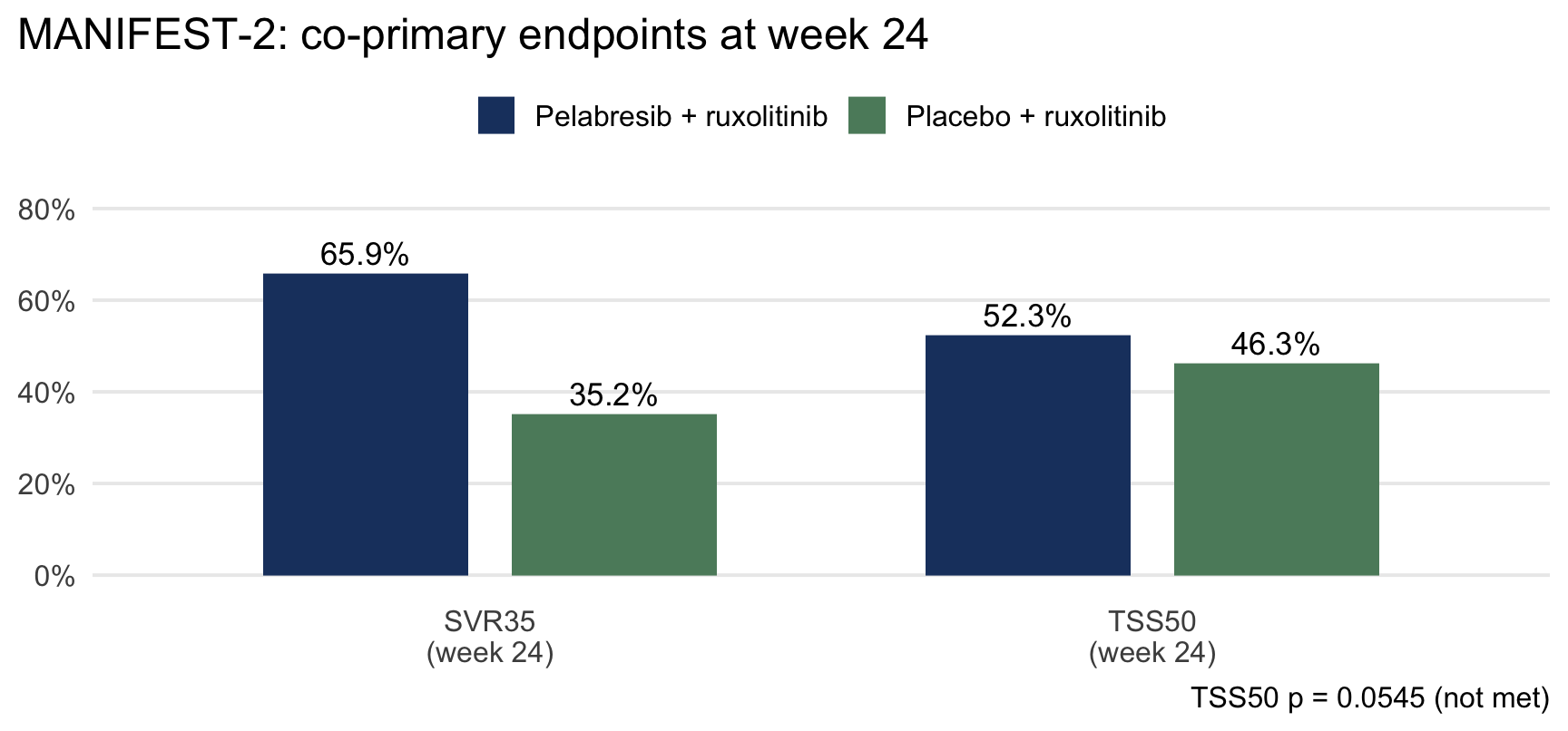
Figure 1
Spleen endpoint met decisively. Symptom co-primary missed.
MANIFEST-2: beyond the co-primaries
- Signals of disease modification: bone marrow fibrosis improvement
- Hemoglobin stabilization — anemia rates lower in the pelabresib arm than the ruxolitinib arm
- Thrombocytopenia and anemia were the most common treatment-emergent adverse events
NCT07357727 — new phase III with enriched eligibility selecting higher symptom burden, purpose-built to hit the TSS co-primary that MANIFEST-2 narrowly missed
Other BET inhibitors
| Agent | Status |
|---|---|
| BMS-986158 | Spleen response rates up to 90% |
| INCB057643 | Dose-limiting hematologic and hepatic toxicity |
| OPN-2853 | Dose-limiting hematologic and hepatic toxicity |
Class efficacy looks real; the therapeutic index is the limiting variable.
PIM1 kinase: nuvisertib
Rationale
- PIM1/PIM2 are serine/threonine kinases acting as downstream effectors of JAK–STAT
- PIM1 is overexpressed in MPN progenitor cells, modulating PI3K–AKT and JAK–STAT to drive proliferation, inflammatory signaling, and fibrosis
Selective beats pan-PIM
In Jak2V617F and MPLW515L murine models, selective PIM1 ablation prevented myelofibrosis progression without affecting platelet counts. Pan-PIM knockout caused thrombocytopenia.
Nuvisertib (TP-3654): the program
- Oral, highly selective PIM1 inhibitor
- Mechanism: inhibition of mTORC1, MYC, and TGF-β signaling; apoptosis in JAK2V617F-expressing HSCs
- NCT04176198 — global phase 1/2 in intermediate/high-risk relapsed or refractory MF, including JAK inhibitor–treated or –ineligible patients
An unusually inclusive threshold
Enrollment permitted platelets as low as 25 × 10⁹/L — meaningfully below most active MF studies, opening the trial to a population with real unmet need.
Nuvisertib: efficacy
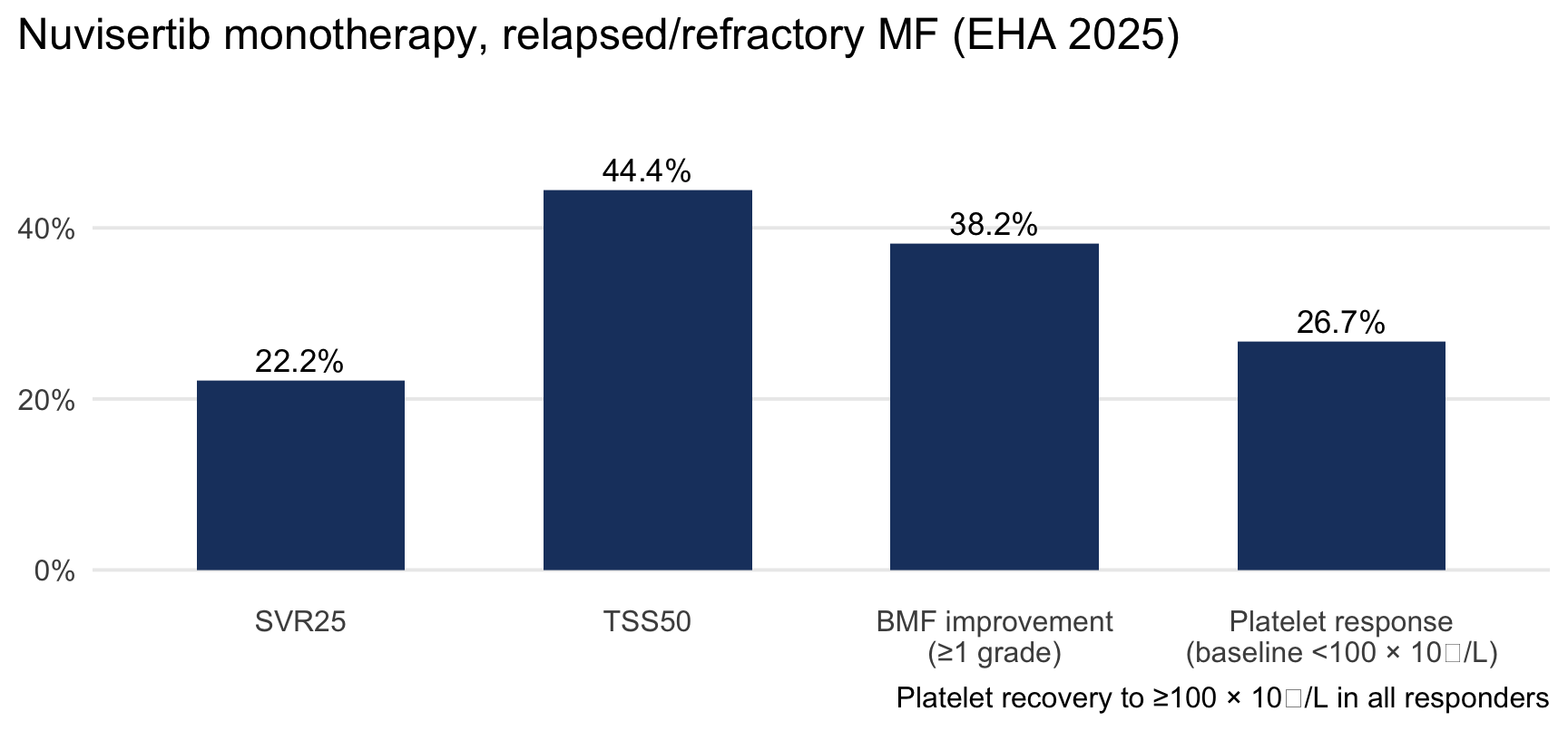
Figure 2
Nuvisertib + momelotinib (ASH 2025)
The first momelotinib combination study in myelofibrosis.
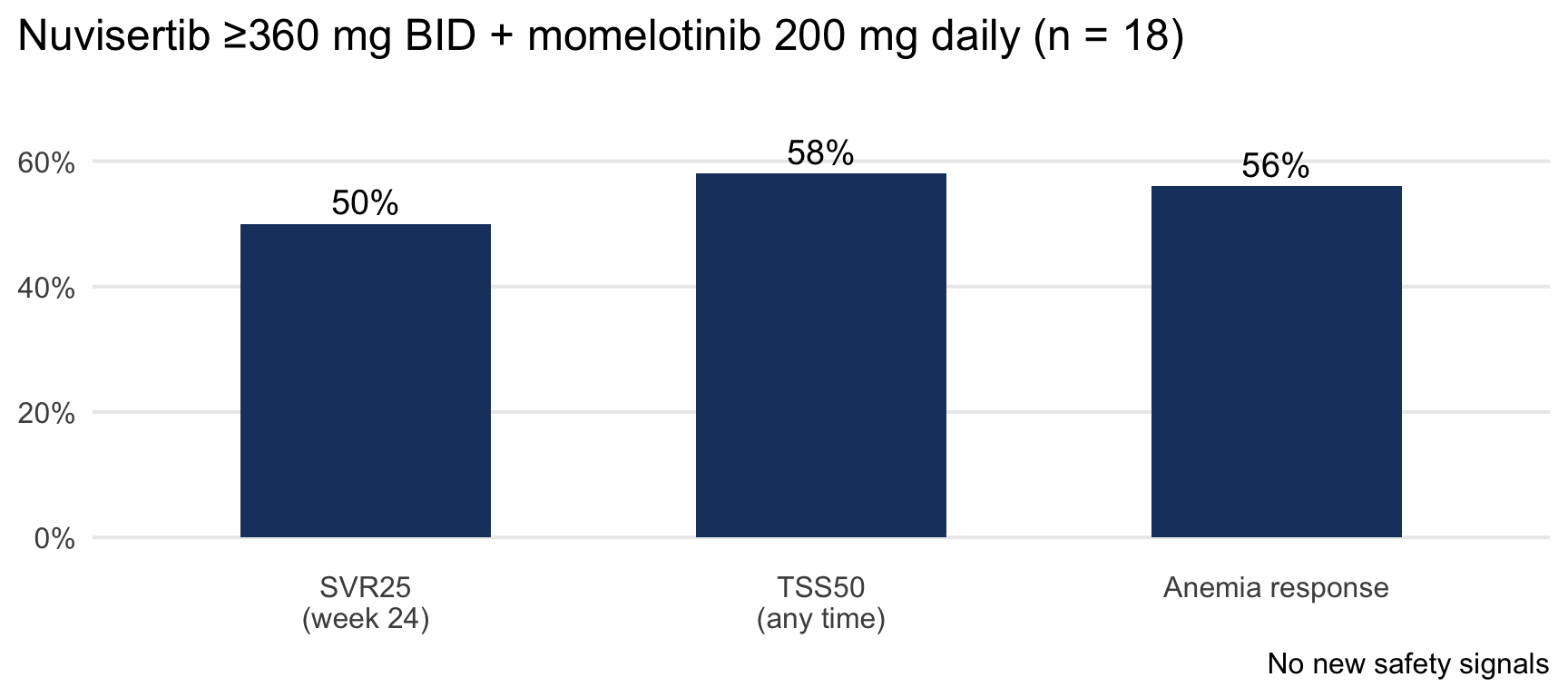
Figure 3
Dual PIM1 + JAK/ACVR1 inhibition addresses disease burden, symptoms, and anemia with limited overlapping cytopenias.
Telomerase inhibition: imetelstat
Rationale
- Telomerase maintains telomere length by adding TTAGGG repeats to chromosome ends, preserving replicative capacity
- Inactive in most somatic cells; aberrantly upregulated in MPN, supporting uncontrolled clonal expansion
- Imetelstat: 13-mer lipid-conjugated oligonucleotide binding competitively to the RNA template region of hTERT → blocked telomere extension → senescence or apoptosis
Development followed an early pilot study reporting an unusually high remission rate in MF.
IMbark (phase II, NCT02426086)
Intermediate-2/high-risk MF, relapsed or refractory to JAK inhibitor therapy — 9.4 mg/kg dose:
- Week 24 symptom response 32%; spleen response 10%
- Median OS 29.9 months, against a historical median of 13–16 months in this population
- Bone marrow fibrosis improvement in 40.5% of evaluable patients
- ≥25% VAF reduction in JAK2 V617F, CALR, or MPL in 42.1%
- Both endpoints correlated with improved OS
- Triple-negative disease: median OS 35.9 months in this poor-prognosis subgroup
IMpactMF (phase III, NCT04576156)
- Open-label, ~320 patients randomized 2:1 to imetelstat vs best available therapy (excluding JAK inhibitors)
A first for the field
IMpactMF is the first phase III trial in myelofibrosis with overall survival as the primary endpoint — a direct reflection of the disease-modification hypothesis.
- Secondary: symptom and spleen response, PFS, bone marrow fibrosis reduction
- As of early 2026, ~100% enrolled across 172 global sites; interim analysis anticipated late 2026
XPO1 inhibition: selinexor
Rationale
- XPO1 mediates nuclear export of tumor suppressors — p53, FOXO, IκB — and is overexpressed across hematologic malignancies
- Inhibition retains those proteins in the nucleus, preserving cell cycle arrest and apoptosis
Translational work shows XPO1 inhibition restores nuclear retention of tumor suppressors in MPN progenitors and synergizes with ruxolitinib at the level of gene expression reprogramming.
XPORT-MF-034 and the ruxolitinib-experienced setting
Phase 1/2, JAK inhibitor–naïve (n = 24), selinexor 40 or 60 mg weekly + standard-dose ruxolitinib:
- Week 24 SVR35 64% overall — 79% at 60 mg vs 38% at 40 mg
- TSS50 45% overall — 58% at 60 mg vs 25% at 40 mg
- Durable splenic responses, improved marrow fibrosis, reduced circulating CD34+ cells
Suboptimal responders / intolerant (phase 2, interim): spleen responses ~38–40%, TSS50 33–41%, any symptom improvement 85–86%
SENTRY (phase 3): design
- n = 353 JAK inhibitor–naïve MF, randomized 2:1
- Selinexor 60 mg weekly + ruxolitinib (n = 235)
- Placebo + ruxolitinib (n = 118)
- Co-primary endpoints at week 24: SVR35 and absolute change in TSS (excluding fatigue, MFSAF v4.0)
SENTRY: the spleen endpoint was met
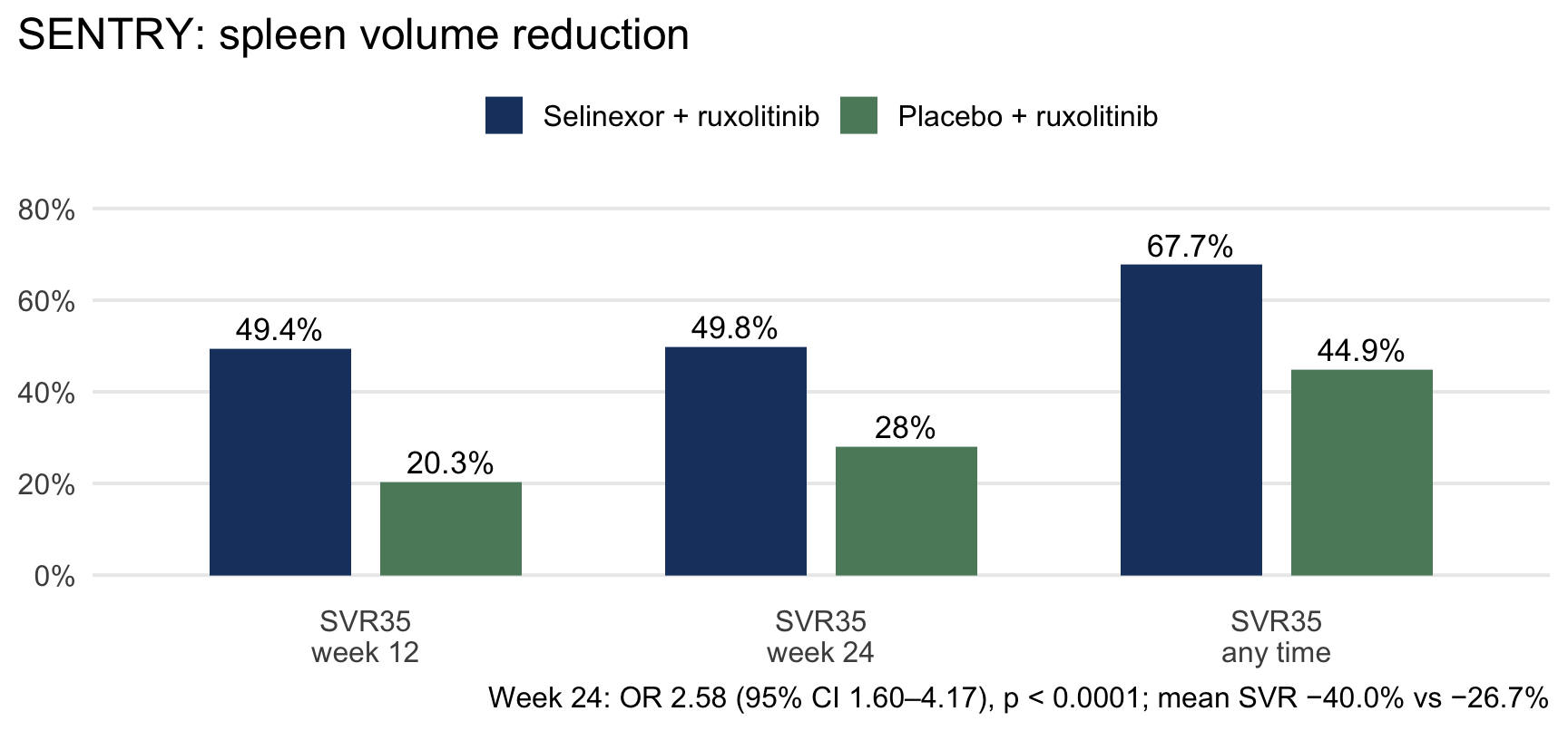
Figure 4
Consistent across all prespecified subgroups.
SENTRY: the symptom endpoint was not
- Abs-TSS change −9.9 vs −10.9 (adjusted mean difference 0.97; 95% CI −1.07 to 3.02; p = 0.825)
- Both arms improved; no between-group difference across symptom domains
Two explanations, not mutually exclusive
- A genuine ceiling on symptom improvement atop a ruxolitinib backbone — shared by pelabresib in MANIFEST-2 and navitoclax in TRANSFORM-1
- Instrument bias — selinexor’s own GI toxicity overlaps MFSAF symptom items
SENTRY: survival, clonal, and safety readouts
Early signals
- OS: HR 0.43 (95% CI 0.19–1.00; nominal p = 0.022); 4.7% vs 10.2% deaths — exploratory, immature, ~12 months median follow-up, 23 events
- PFS: no difference (HR 0.97)
- ≥20% driver VAF reduction: 32.0% vs 23.9%; VAF reduction associated post hoc with higher SVR35 (OR 3.22)
Toxicity
- Grade ≥3 TEAE 70.1% vs 50.0%
- Nausea 57.3% vs 17.2% — mostly grade 1–2, early
- Grade ≥3 thrombocytopenia 17.9% vs 3.4%, without excess bleeding
- Grade ≥3 neutropenia 16.2% vs 6.9%, without excess infection
- Grade ≥3 anemia comparable (37.2% vs 31.9%)
- Leukemic transformation identical, 1.7% in both arms
Ruxolitinib dose intensity was lower in the selinexor arm (67.7% vs 83.5%) despite higher spleen response — supporting an independent selinexor contribution rather than improved JAK inhibitor delivery.
Mutant CALR–directed therapy
The most tumor-specific target in the field
- All pathogenic CALR mutations in MPN share a common frameshift producing the same neoantigen peptide
- That peptide is absent from normal physiology and directly activates MPL, driving neoplastic proliferation
Why this is unusual
The target is simultaneously functionally essential to pathogenesis and entirely tumor-specific — a combination rarely available in myeloid disease.
INCA033989
- Fully humanized IgG1 with a silenced Fc domain
- Mechanism is not ADCC or CDC — it is antibody-mediated endocytosis of the mutant CALR–MPL complex followed by lysosomal degradation
An open question about mutation subtype
High affinity for both type 1 and type 2 mutant CALR, but approximately 3.9-fold lower affinity for type 2 — with unresolved implications for differential efficacy.
Two ongoing phase 1 trials in CALR-mutated ET, PMF, or secondary MF: NCT06034002 (monotherapy) and NCT05936359 (monotherapy or with ruxolitinib)
INCA033989: first 41 patients
Efficacy
- Platelet counts decreased in 79%
- Mutant CALR VAF reduced in 88%
- Partial molecular response (>50% VAF reduction) in 25%
Safety
- Fatigue 27%, upper respiratory infection 17% — low grade
- Nine patients with grade ≥3 events, including transient lipase elevation and neutropenia
Whether this translates into durable disease modification — sustained hematologic response, fibrosis regression, clonal selectivity against MPN stem cells — remains undetermined.
Beyond unconjugated antibodies
- Antibody-drug conjugates — mutant CALR antibodies with SMARCA2/4 degrader payloads; preclinical mutant-selective cytotoxicity
- Bispecifics — JNJ-88549968 (mutant CALR × CD3) in phase 1 (NCT06150157); INCA035784 with equipotent type 1/type 2 binding preclinically
- Vaccines — VAC85135 (CALR/JAK2 neoantigen + ipilimumab) showed only transient immune responses in a minority and no clinical benefit; development discontinued
- CAR-T — preclinical, promising in vitro and xenograft cytotoxicity
The constraint on every T-cell-dependent approach
Terminal T-cell exhaustion is well documented in myelofibrosis and may limit bispecifics, vaccines, and CAR-T alike.
The unresolved question
Will directly cytotoxic, T-cell-dependent strategies achieve deeper clonal reduction than T-cell-independent approaches that block pathogenic proliferation — or will combinations prove necessary?
Complicating factors:
- CALR mutations may be subclonal or coexist with independent clones
- Structural work shows the mutant CALR C-terminal neoepitope engages specific MPL extracellular residues distinctly from wild-type CALR, guiding epitope optimization across both mutation subtypes
Anemia: elritercept
Rationale
- JAK inhibition of erythropoietin signaling causes anemia → dose reduction → lost benefit
- Elritercept: modified ActRIIA ligand trap sequestering activin A, activin B, and GDF8/GDF11, relieving the blockade on late-stage erythroid differentiation
JAK and TGF-β superfamily signaling are both aberrantly activated in MF, contributing to ineffective hematopoiesis, splenomegaly, and cytopenias — making dual pathway targeting mechanistically rational rather than merely additive.
RESTORE (phase 2, NCT05037760) — combination arm
n = 38 at RP2D 3.75 mg/kg every 4 weeks + ruxolitinib; median treatment duration 34 weeks (ASH 2025).
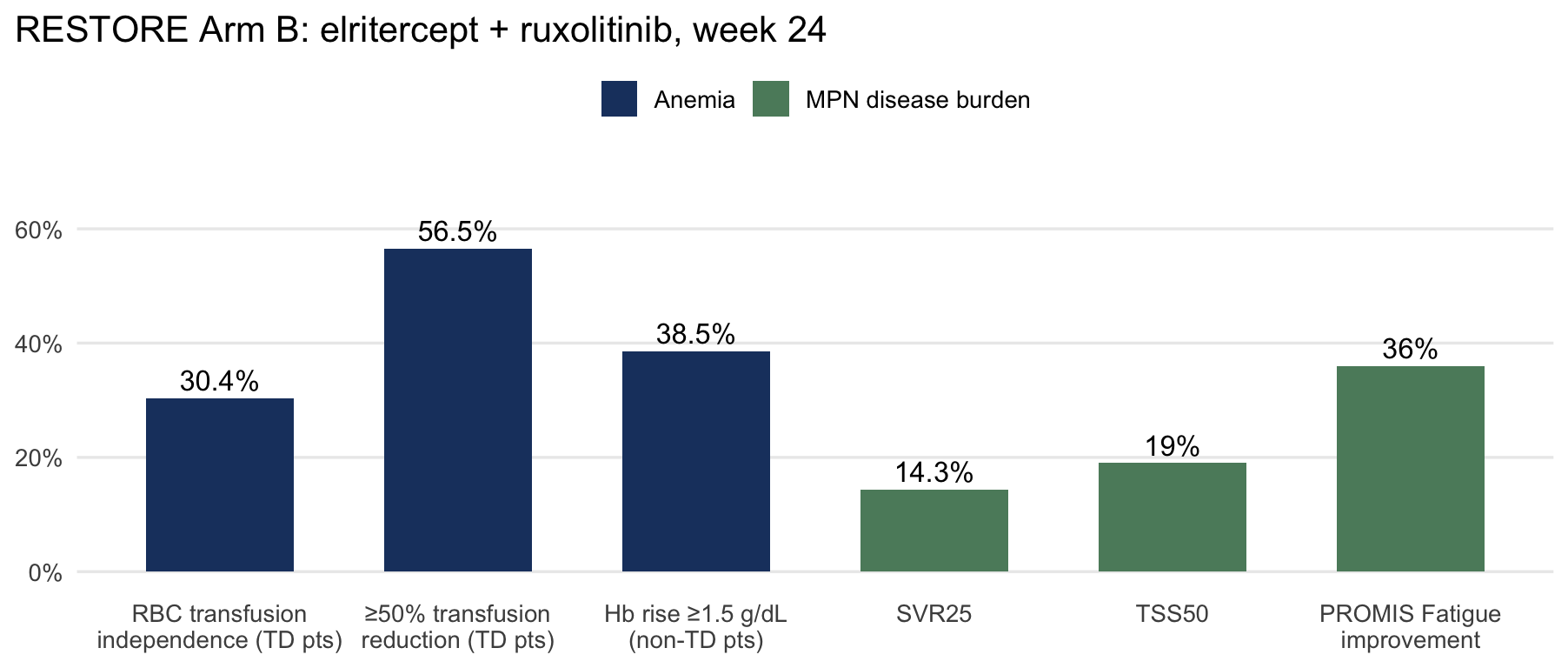
Figure 5
RESTORE: tolerability and mechanism
- Most common AEs: diarrhea 18.4% (all grade 1/2), thrombocytopenia 13.2% (grade 3 in 10.5%)
- No discontinuations for adverse events
- Platelet counts maintained or increased — consistent with an effect on ineffective hematopoiesis across multiple lineages
Exploratory: decreases in serum ferritin and hepcidin, plus early signals regarding clonal architecture and hematopoietic restoration — requiring validation
Elritercept vs luspatercept
The differentiating ligand
Elritercept inhibits activin A — upregulated in the inflammatory milieu of myelofibrosis and not effectively neutralized by luspatercept (an ActRIIB trap).
The phase 3 INDEPENDENCE trial of luspatercept in transfusion-dependent MF on a JAK inhibitor did not meet its primary endpoint of 12-week RBC transfusion independence (p = 0.0674), despite numerical improvement in transfusion burden and hemoglobin.
Best-positioned population for elritercept: JAK inhibitor–experienced patients with treatment-associated or disease-related anemia.
Next-generation JAK2 targeting
The mechanistic flaw in every approved agent
All approved JAK inhibitors are type I — they bind the active (DFG-in) conformation at the ATP site.
- They block signaling but maintain the activation loop in a phosphorylated state
- Type I inhibitors shield activation-loop tyrosines from phosphatases, locking JAK2 in an active conformation even during treatment
Two clinical consequences
This paradoxical hyperphosphorylation explains both persistent JAK–STAT signaling despite adequate drug exposure and the withdrawal syndrome on discontinuation.
Type II JAK2 inhibition: AJ1-11095
- Binds the inactive (DFG-out) conformation, accessing a hydrophobic allosteric pocket inaccessible to type I agents, locking the kinase “off”
- In that conformation JAK2 cannot engage JAK1 or TYK2 for heterodimerization-driven transactivation — the established type I resistance mechanism
- First selective type II JAK2 inhibitor in clinical evaluation, designed by computational structure-based drug design
Preclinical (competitive transplant models): superior to ruxolitinib with marked reductions in mutant allele burden, spleen weight, marrow fibrosis, and pro-fibrotic cytokines (TNFα, IL-13, IP-10)
NCT06343805 — phase 1 in MF refractory to type I JAK2 inhibitors
Allosteric JH2-domain inhibitors
INCB160058 — first-in-class JH2-binding agent
- Picomolar affinity
- >2,500-fold selectivity for JAK2 V617F over wild-type JH1
- NCT06313593 — phase 1 across MF, PV, and ET
The theoretical promise: eliminate the mutant clone while preserving cytokine-dependent wild-type JAK2 function — and therefore without the cytopenias inherent to conventional JAK inhibition.
Also in development: PRT12396 (Prelude, IND planned Q1 2026), programs from Atavistik Bio, and ZE74-0282 (Eilean Therapeutics)
JAK2 PROTACs
- Rather than blocking kinase activity, a PROTAC recruits an E3 ubiquitin ligase to tag JAK2 for proteasomal destruction
- Offers complete pathway suppression, longer duration of effect, and potential to overcome ATP-site resistance mutations
Compound 10i: 91% degradation in JAK2 V617F–mutant SET-2 cells, DC50 ≈ 27 nM; suppressed EPO-mediated polycythemia and splenomegaly in murine models
Still preclinical for JAK2 — but rapid clinical translation of analogous degraders in other hematologic malignancies suggests a short runway.
Synthesis
Phase 3 combinations: the same pattern
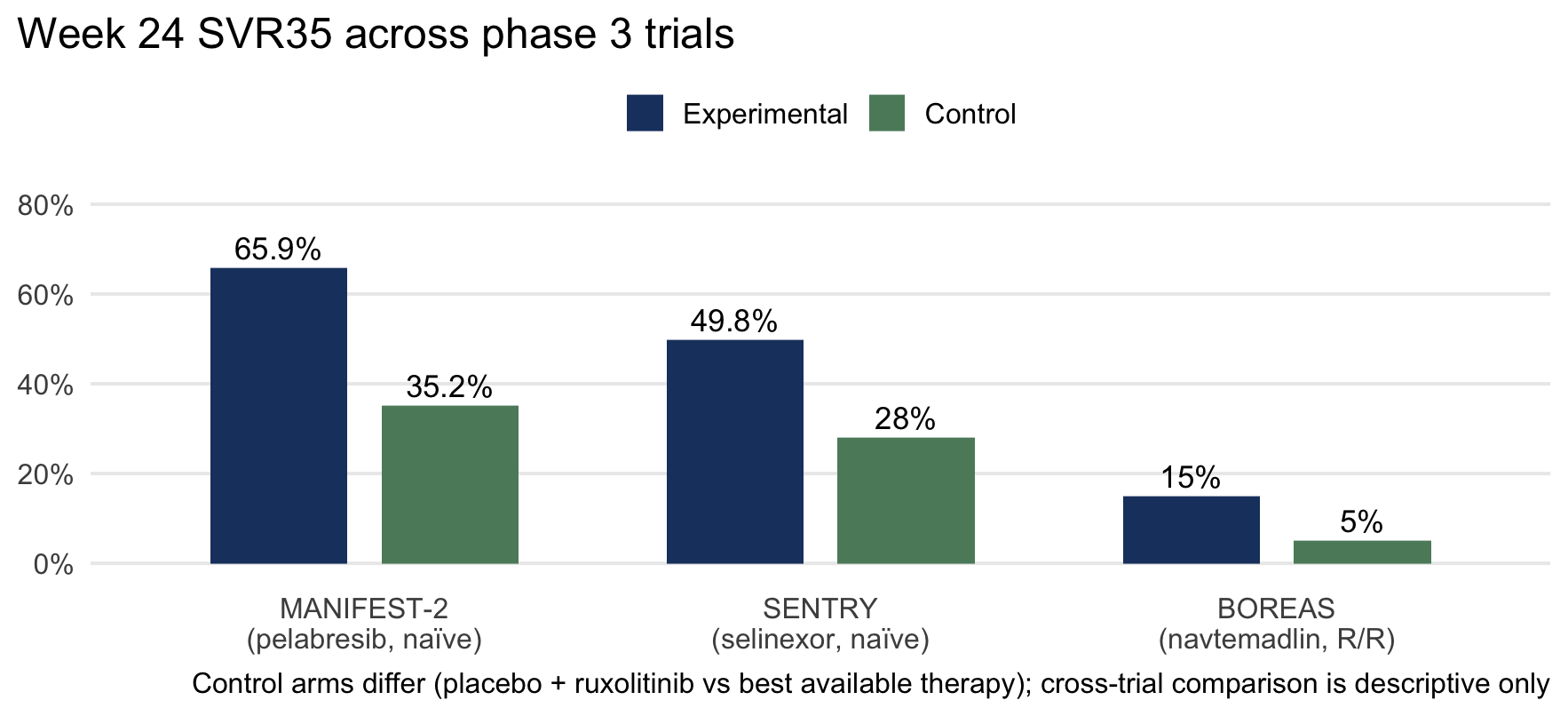
Figure 6
Spleen endpoints separate cleanly. Symptom endpoints repeatedly do not.
Where each mechanism fits today
| Mechanism | Agent | Best-positioned setting |
|---|---|---|
| BET | Pelabresib | Frontline combination, high symptom burden |
| PIM1 | Nuvisertib | R/R, including thrombocytopenia |
| Telomerase | Imetelstat | Post-JAK inhibitor; OS endpoint pending |
| XPO1 | Selinexor | Frontline combination; suboptimal responders |
| Mutant CALR | INCA033989 | CALR-mutated ET/MF |
| ActRIIA trap | Elritercept | JAK inhibitor–experienced with anemia |
| Type II / JH2 / PROTAC | AJ1-11095, INCB160058 | Type I–refractory disease |
Take-home points
- The definition of response must change. Symptom control is necessary and insufficient; VAF reduction, fibrosis regression, and prevention of leukemic transformation are the targets.
- Transplant remains the only curative therapy and is likely to remain so. These agents aim to improve pre-transplant disease state, expand eligibility, and control disease for the transplant-ineligible majority — not to supplant allo-HCT.
- Molecular endpoints must not eclipse lived experience. QoL metrics ensure disease-modifying drugs do not arrive at the cost of unbearable toxicity.
- Health equity is a live concern. Trials concentrate at large academic centers; rural and low-resource patients have limited access. Diverse recruitment is a design obligation.
Key references
- Mascarenhas J, et al. MANIFEST: pelabresib + ruxolitinib in JAK inhibitor–naïve MF. J Clin Oncol. 2023;41(32):4993-5004.
- Rampal RK, et al. Pelabresib plus ruxolitinib for JAK inhibitor–naïve MF: randomized phase 3. Nat Med. 2025;31(5):1531-1538.
- Dutta A, et al. Genetic ablation of Pim1 or inhibition with TP-3654 ameliorates myelofibrosis in murine models. Leukemia. 2022;36(3):746-759.
- Mascarenhas J, et al. Nuvisertib + momelotinib in R/R MF. Blood. 2025;146(Suppl 1):482.
- Mascarenhas J, et al. Selinexor plus ruxolitinib in JAK inhibitor–naïve MF: SENTRY phase 3 design. Future Oncol. 2025;21(7):807-813.
- Handa S, et al. Discontinuation syndrome with JAK2-selective agents. JCO Precis Oncol. 2024;8:e2300234.
- Gotlib J, et al. INCB160058, first-in-class JAK2V617F mutant–selective inhibitor. Blood. 2025;146(Suppl 1):2051.
- Wang C, et al. Discovery of a PROTAC degrader of JAK2 for JAK2-mediated MPN. J Med Chem. 2025.