Targeting Mutant Calreticulin in Myelofibrosis

INCA033989 · EHA 2026 (Harrison oral; Nangalia PF884)

Ashwin Kishtagari, MBBS, MSCI

Division of Hematology/Oncology, Vanderbilt University Medical Center

2026-08-18

Background

CALR-mutant MF: an unmet need

Myelofibrosis (MF) is a myeloproliferative neoplasm marked by bone marrow fibrosis, anemia, splenomegaly, debilitating symptoms, and shortened survival.

  • Calreticulin (CALR) exon 9 mutations occur in ~25–35% of MF (~70% are Type 1)
  • mutant CALR (mutCALR) disease has inferior responses to current therapy — lower spleen and symptom responses, more anemia on ruxolitinib
  • JAK inhibitors treat the clinical features but have limited impact on the stem/progenitor cells that initiate and sustain disease, and do little to lower mutCALR allele burden

INCA033989 — mechanism

A novel, first-in-class, fully human, Fc-silenced IgG1 monoclonal antibody.

  • Selectively binds mutCALR in complex with the thrombopoietin receptor (TPO-R)
  • Blocks mutCALR-driven TPO-R dimerization → shuts off constitutive JAK-STAT signaling → blocks oncogenic proliferation

Note

Investigational agent — not FDA-approved. Data below are from a phase 1, first-in-human program presented at EHA 2026.

Study Design

Two phase 1, first-in-human studies

INCA033989-101 (NCT05936359; ex-US) and INCA033989-102 (NCT06034002; US) — multicenter, open-label, in CALR exon-9–mutant ET or MF.

  • IV every 2 weeks: 24–3500 mg (monotherapy); 70–2500 mg (combination)
  • Dose expansion evaluated 250 mg and 2000 mg

MF eligibility

  • ≥18 years, primary or post-ET MF, with mutCALR exon 9
  • Spleen volume ≥450 mL or palpable splenomegaly ≥5 cm
  • Monotherapy: intolerant, resistant after ≥12 weeks, or JAKi-ineligible
  • Combination: prior ruxolitinib ≥12 weeks with suboptimal response

Endpoints

Primary — dose-limiting toxicities (DLTs); treatment-emergent adverse events (TEAEs)

Secondary

  • SVR25 and SVR35 at weeks 12 and 24
  • Anemia response
  • Symptom improvement (MPN-SAF TSS)
  • Change in mutCALR allele burden (VAF)

Patients (MF cohorts)

Mono: JAKi R/R/I (N=62) Mono: JAKi-ineligible (N=21) Combination (N=21)
Median age, y 60 64 61
Female 37.1% 28.6% 23.8%
DIPSS INT-2 / High 46.8% / 3.2% 52.4% / 0 47.6% / 14.3%
CALR Type 1 59.7% 52.4% 61.9%
Median spleen vol, mL 1396 1225 2376
Median Hb, g/L 99 101 94
Median exposure, days 233 345 335

Safety

Monotherapy: well tolerated

  • 84% (70/83) still on treatment; no DLTs, MTD not reached, no fatal TEAEs
  • Grade ≥3 TEAEs 26.5%; serious 8.4%; discontinuation for TEAEs only 2.4%
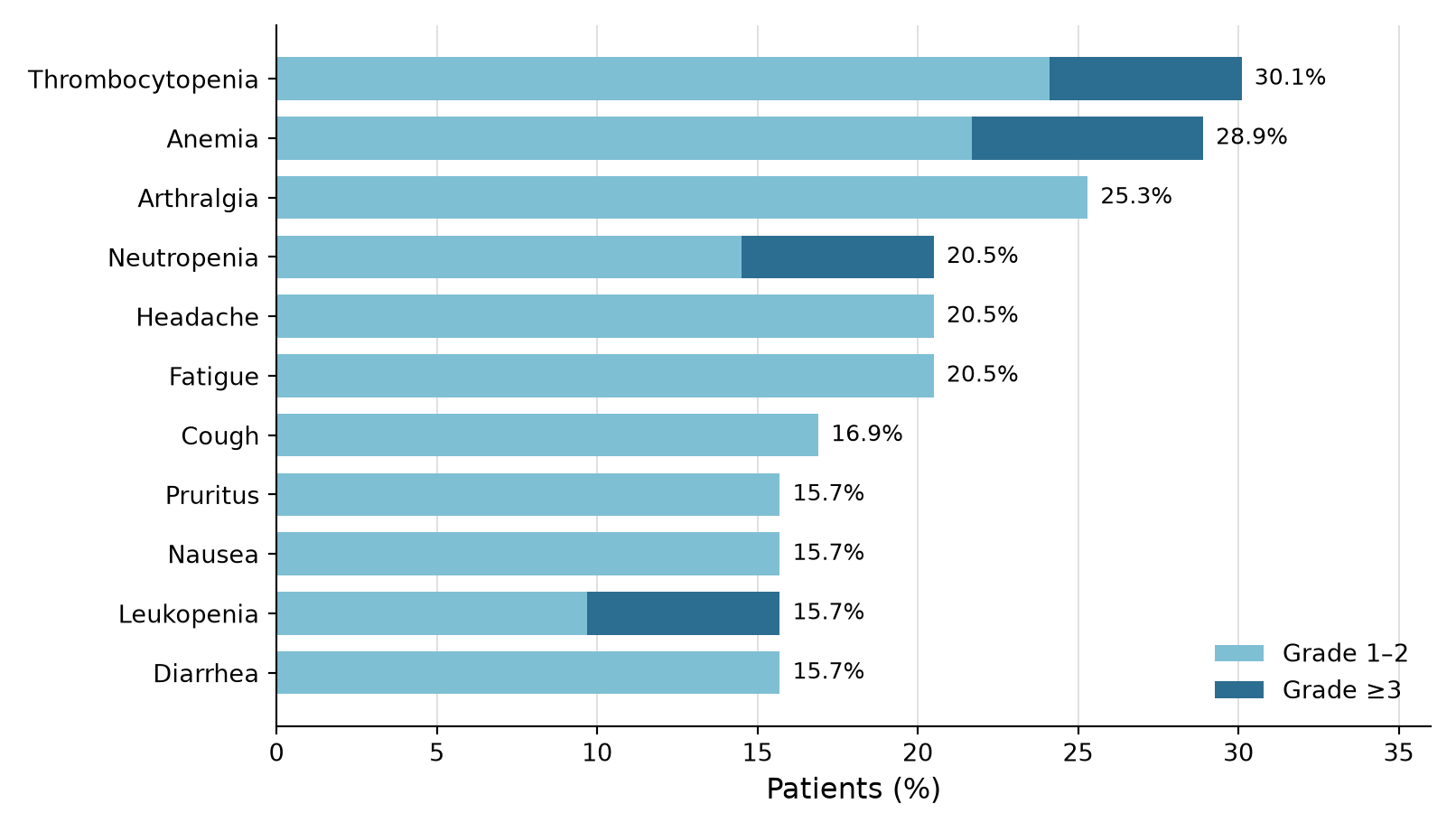
  • Most frequent grade ≥3 events were cytopenias, usually in patients with pre-existing cytopenias; no dose relationship with TEAEs
(0.0, 36.0)

Figure 1

Note

Most common monotherapy TEAEs (≥15%), N=83. Python / matplotlib.

Combination with ruxolitinib

More cytopenias when added to a JAK inhibitor — as expected — but still no DLTs.

TEAE summary (N=21) n (%)
Any TEAE 21 (100)
Grade ≥3 14 (66.7)
Serious 6 (28.6)
Fatal 0
Discontinued INCA033989 for TEAEs 3 (14.3)
  • 76% (16/21) remained on treatment
  • Grade ≥3 anemia 33.3%, thrombocytopenia 9.5% — driven by the ruxolitinib backbone

Efficacy

Best responses (monotherapy)

Rapid, robust responses across spleen, symptoms, and anemia.
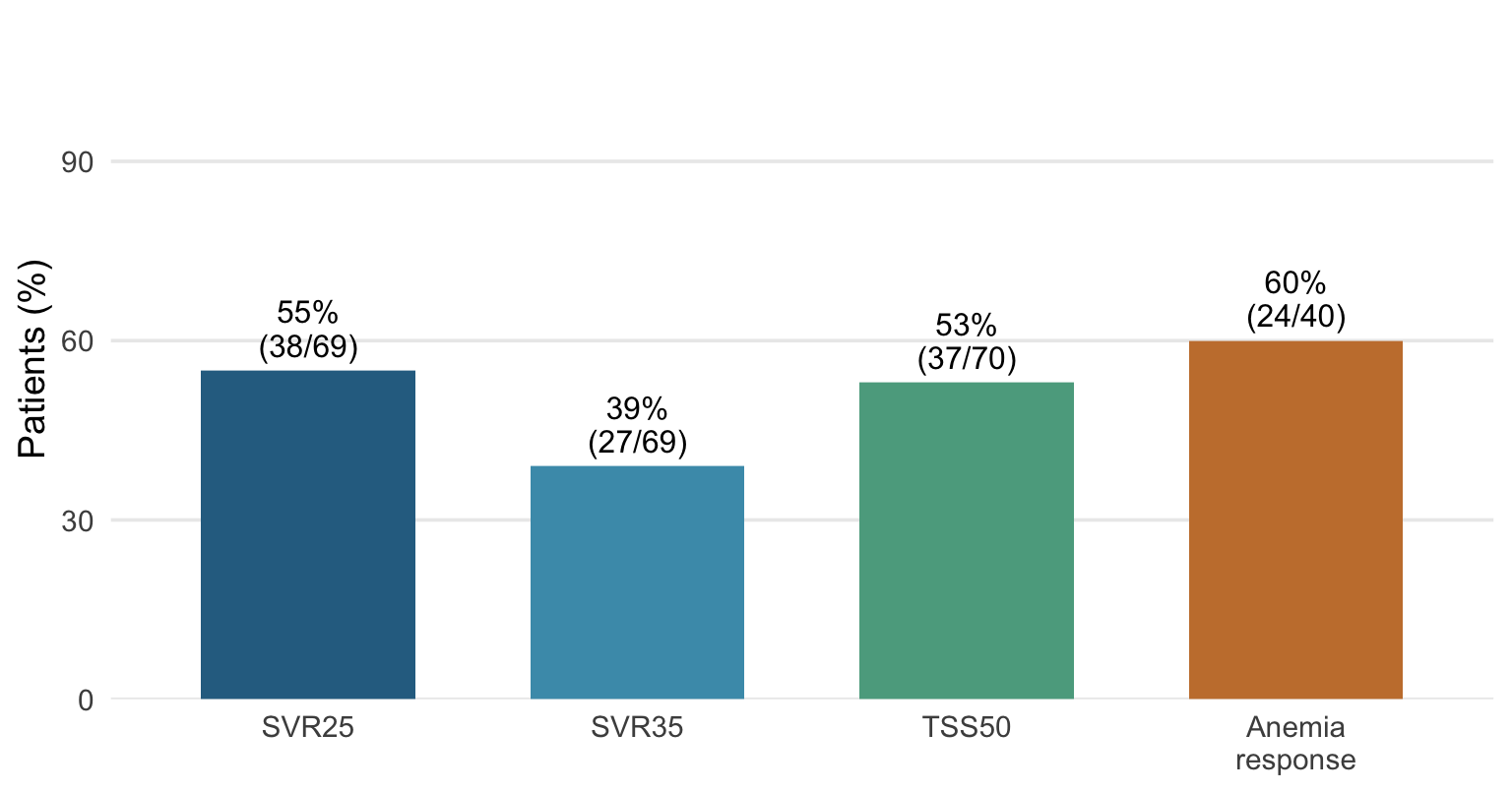
Figure 2

Spleen response by mutCALR type

The Type 1 vs non–Type 1 split is striking — Type 1 patients respond far better.
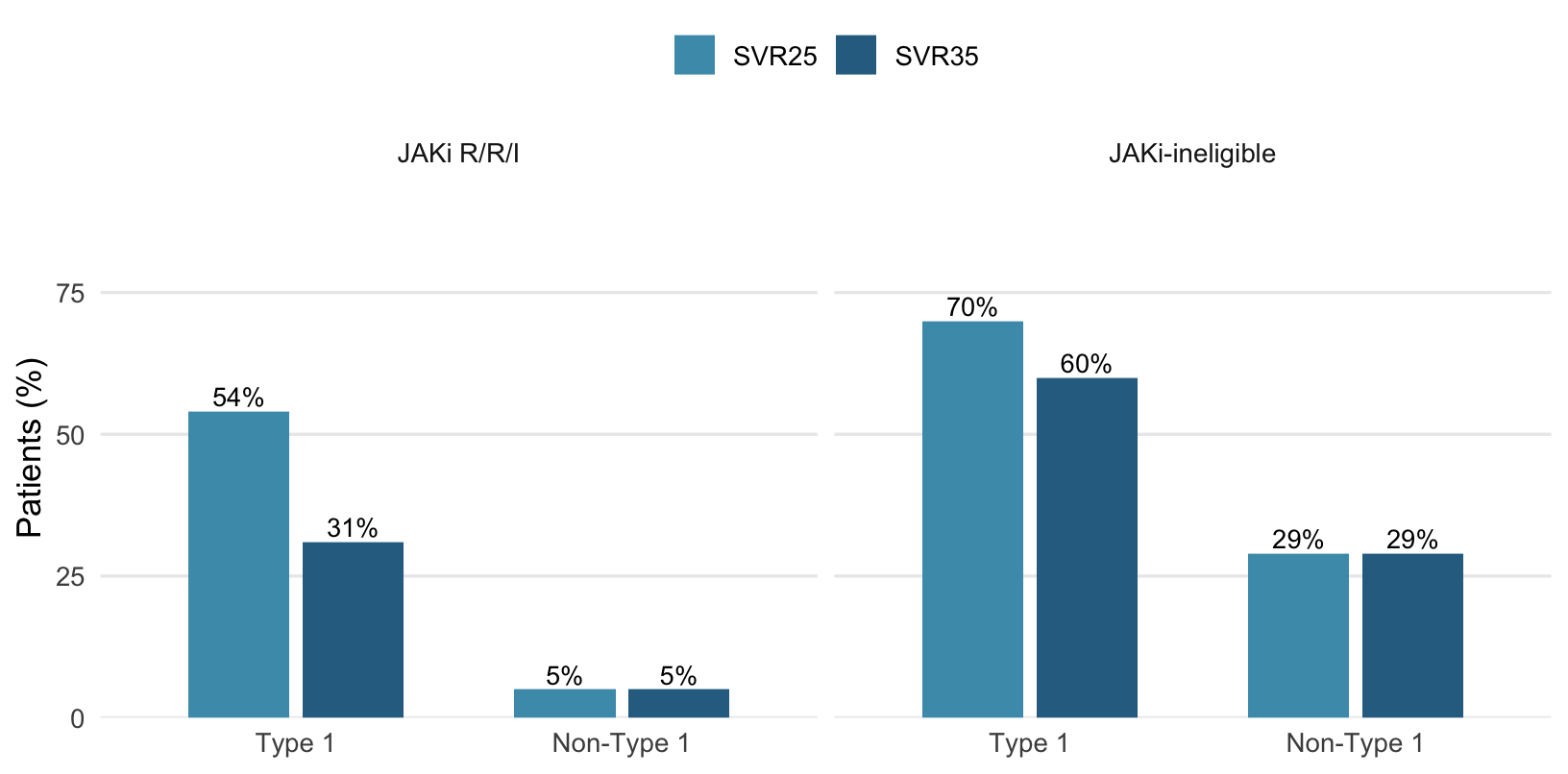
Figure 3

Note

Week-24 spleen response, monotherapy. Overall: SVR25 39% (24/62), SVR35 27% (17/62); combination SVR25 55% (11/20). R / ggplot2.

Anemia response (monotherapy)

Anemia response in 60% (24/40) of evaluable anemic patients — mostly major.

Best anemia response Nonanemic (n=29) TDA (n=6) Non-TDA (n=34) Total (n=69)
Response 62.1% 66.7% 58.8% 60.9%
— Major 51.7% 50.0% 52.9% 52.2%
Stable 37.9% 16.7% 32.4% 33.3%
  • Improvement in 63% (31/49) JAKi R/R/I and 55% (11/20) JAKi-ineligible patients
  • 35% (6/17) with the ruxolitinib combination

Molecular Response & Disease Modification

mutCALR VAF reduction

The antibody reduced the mutant clone, not just blood counts.

  • 89% of monotherapy patients had a reduction in whole-blood mutCALR VAF (35/39 Type 1; 23/26 non–Type 1); 12.3% reached MR25 as best molecular response
  • 81% (21/26) had a ≥25% reduction in mutCALR PBMCs
  • Reductions in peripheral blasts and circulating mutCALR HSPCs across both mutation types — a hit on disease-initiating cells

Responses regardless of high molecular risk

Most MF patients (85%) had co-occurring mutations (ASXL1, TET2, EZH2, SF3B1 …), frequently subclones of mutCALR. Responses held up with or without HMR.

(0.0, 112.0)
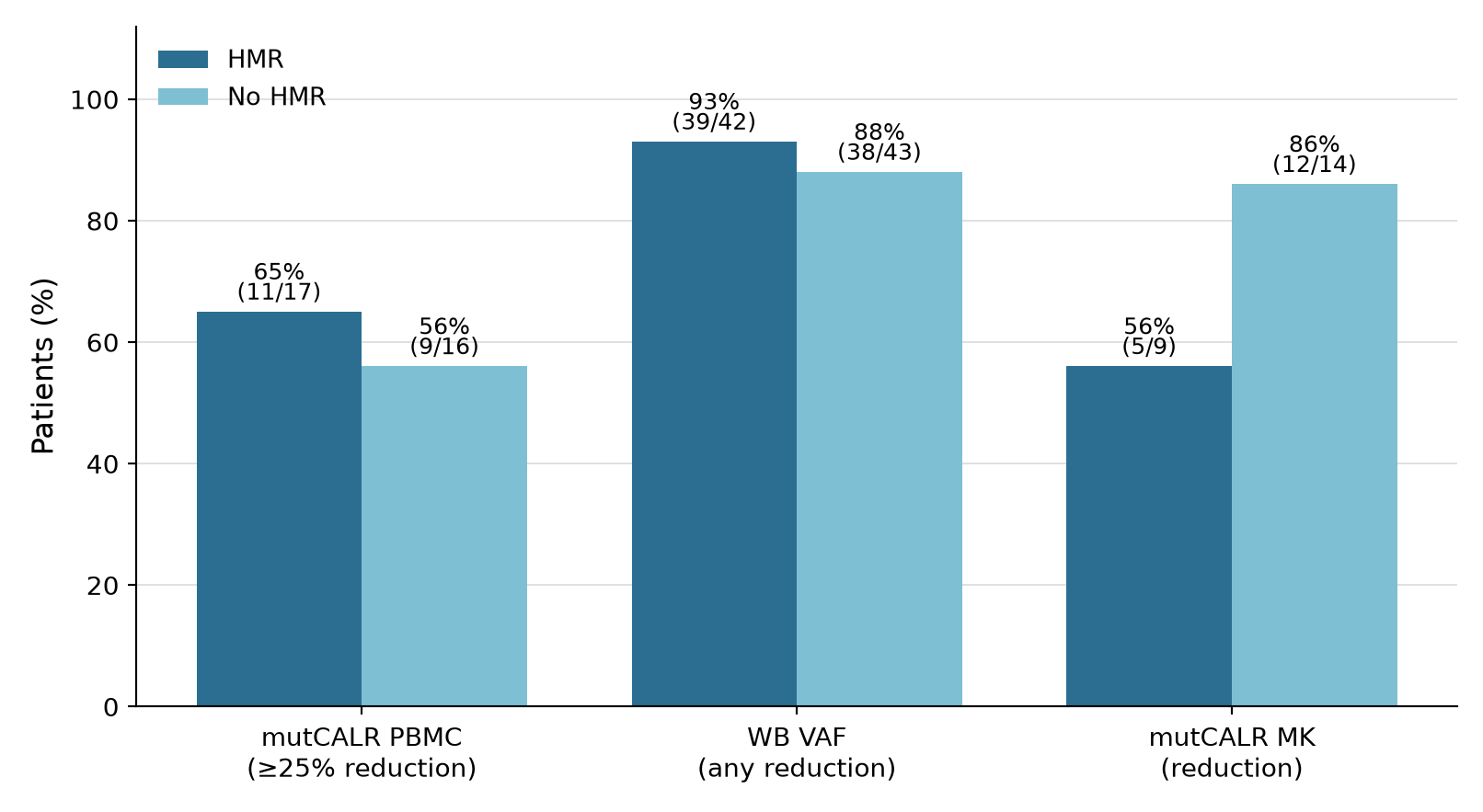
Figure 4

Note

Molecular response by HMR status (MIPSS70). Spleen response also did not differ by HMR (Fisher’s P > 0.05). Python / matplotlib.

Bone marrow & hematopoiesis

Evidence pointing toward disease modification:

  • Reduced mutCALR⁺ megakaryocytes in marrow from screening to cycle 7
  • Fibrosis grade improved in 40% (17/42) by C7D1 (60% unchanged)
  • CD71 (erythroid) recovery, tracking with anemia improvement
  • Subclonal complexity within the mutCALR clone did not blunt molecular response

Conclusions

Summary

  • INCA033989 — first-in-class antibody targeting mutCALR — was well tolerated as monotherapy and with ruxolitinib; no DLTs, MTD not reached
  • 84% / 76% remained on monotherapy / combination
  • Rapid, robust spleen, symptom, and anemia responses, strongest in Type 1 disease
  • mutCALR VAF reduction plus marrow and hematopoietic recovery support disease-modification potential — including in HMR disease

What’s next

These data support a planned phase 3 program:

EXCALIBUR-ET2 — NCT07623200

Warning

Early-phase, investigational data summarized from two EHA 2026 presentations (Harrison oral; Nangalia PF884). Figures are rebuilt from reported summary statistics for educational use and should be checked against the primary sources; this agent is not approved and conclusions are preliminary pending phase 3.